GRE tunnel
Protected GRE tunnel
260 €
/ month
- BGP or static routing
- IPv4 and IPv6
- Redundant setup
- /30 IPv4 and /128 IPv6
- 1 Gbps 95/5 clean traffic included
- 24/7 support

SmartMitigate
Filter attack traffic before it reaches your network. Use SmartMitigate on a SMARTNET connection, take a direct cross-connect, or protect infrastructure at another provider over GRE.
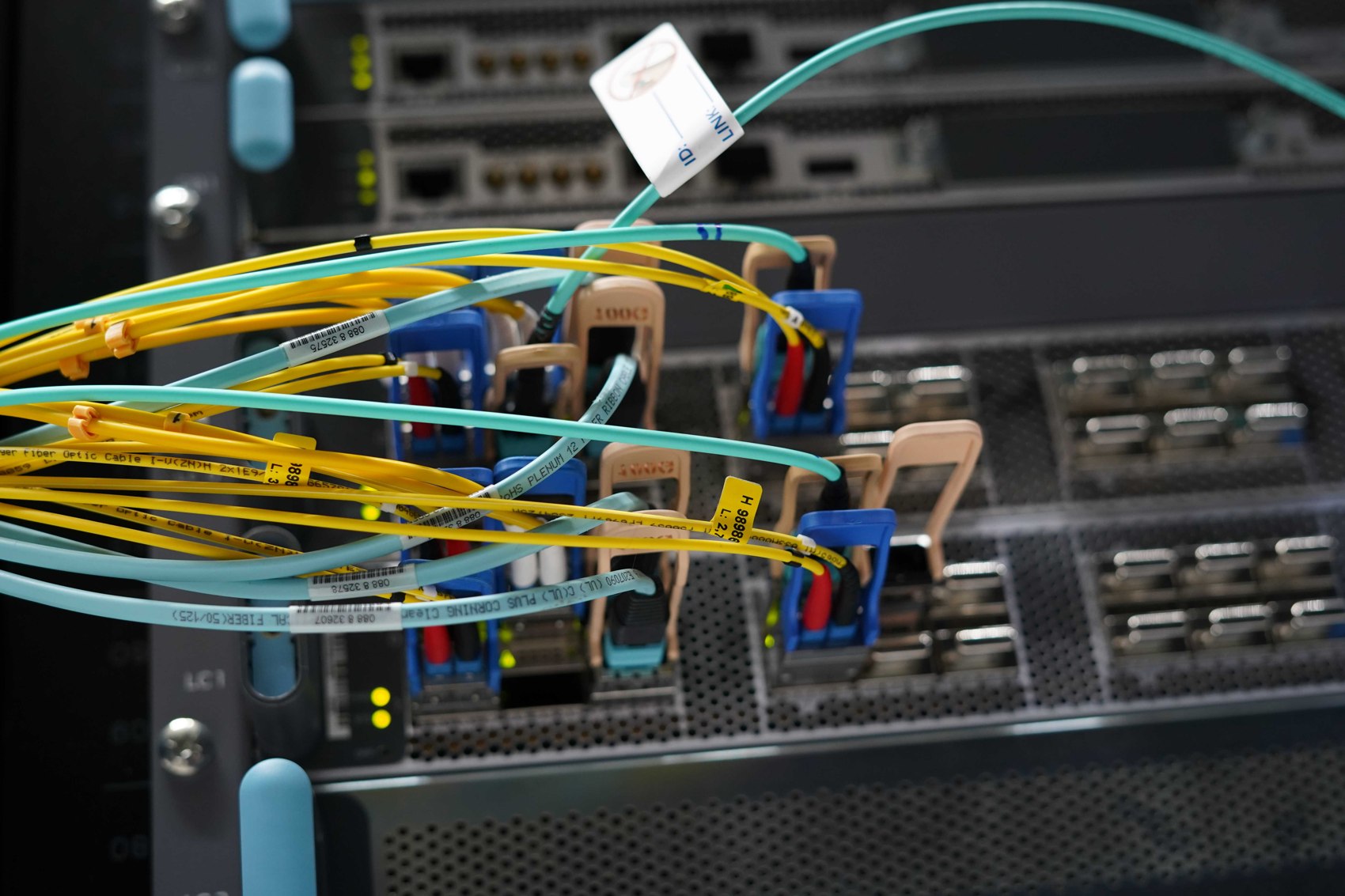
SmartMitigate inspects traffic on our network before forwarding it to you. We develop the eBPF/XDP filters ourselves and can investigate packet captures when an attack needs different handling.
The checks include SYN validation, TCP and UDP authentication, and filters that understand the protocols used by supported game and voice services.
You can keep your equipment with its current provider and receive filtered traffic over GRE. If you are in a data centre where we can connect directly, a cross-connect is another option.
A game server and a voice server do not use the same packet formats or connection setup. SmartMitigate applies checks for the supported protocol, allowing the filter to make more specific decisions about the traffic.
For TCP applications, we recommend keeping protection active. Moving established connections onto a different route after an attack starts can interrupt them.
Keep UDP and supported TCP traffic on the filtering path during normal operation as well as during an attack. This avoids changing the route when an attack begins.
If your application needs checks that an existing filter does not cover, speak to us about a custom filter. We will assess the additional development involved.
Allow known source prefixes through a whitelist. If one of those sources starts sending attack traffic, it may still be rate limited.
Set the filtering rules for your destination IPs and services in DELTA, without applying one policy to every service you run.
Use DELTA to see when an attack started, inspect sampled packets and review how the filters handled it.
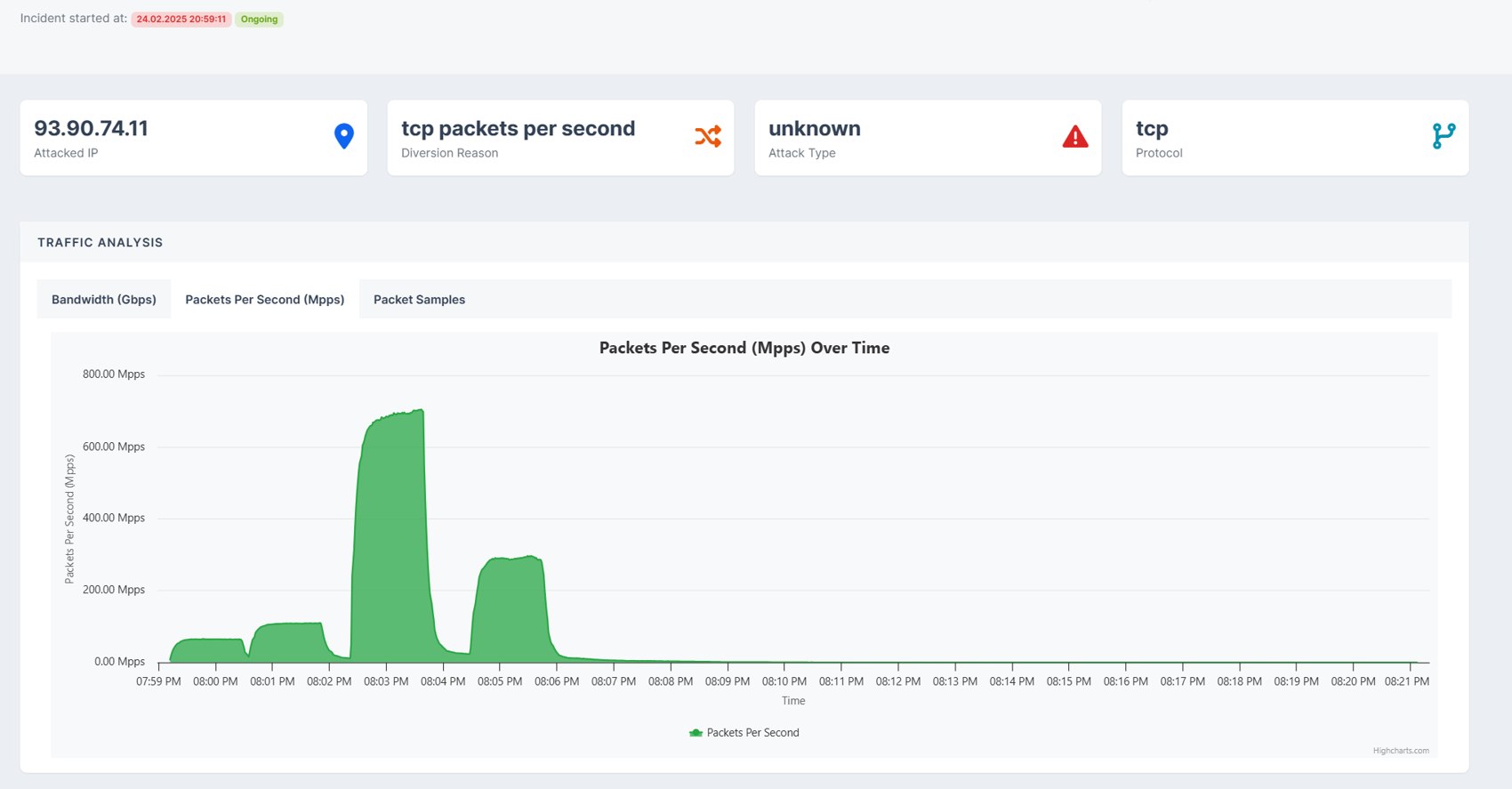
Packet captures help us investigate replay attacks and develop rules when we encounter a new attack pattern.
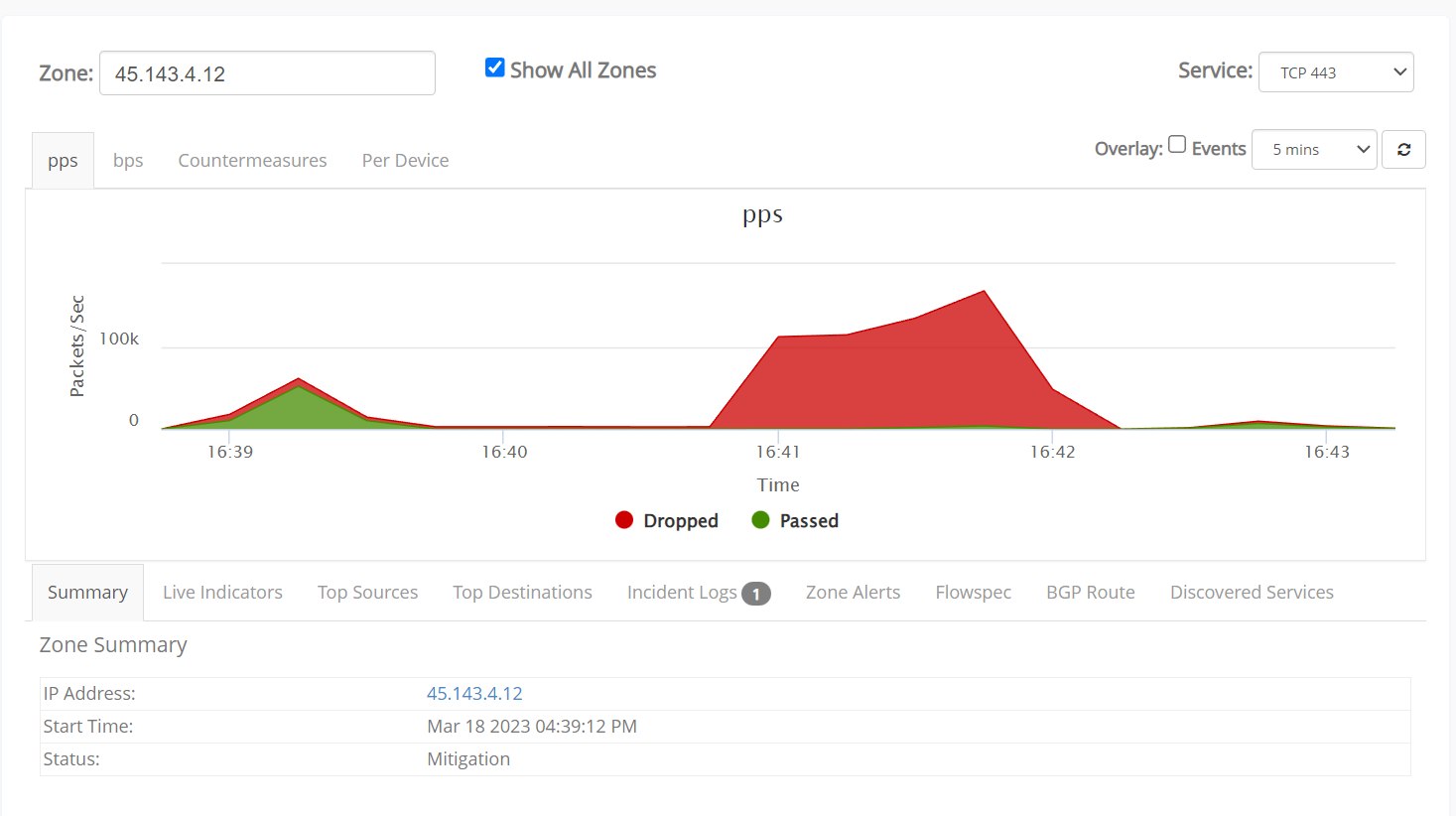
Traffic is inspected continuously without waiting for manual diversion.
Attack history, packet samples and filter actions via DELTA and the REST API.
Review captured packets when investigating an attack.
Coverage for TCP, UDP, ICMP, GRE and IPv6 traffic.
Profiles for TeamSpeak, FiveM, Minecraft, Source-engine traffic and other services.
Rules can match individual protocols, ports and services.
This service filters network and transport-layer attacks. Bots and other abuse that resembles legitimate application traffic also need controls in the application or reverse proxy.
These attacks must be handled at the application or reverse-proxy layer rather than by the network mitigators.
Use the listed port ranges for each application. Unrelated traffic on those ports can interfere with protocol-specific filtering.
UDP traffic and FiveM TCP traffic on ports 30000-32000 are currently routed through SmartMitigate permanently.
Some traffic classes are constrained during attacks to protect the affected service and the wider network.
Public resolvers such as 1.1.1.1, 8.8.8.8 and 9.9.9.9 receive higher priority during DNS-related attacks.
GRE and uncommon protocols require known source and destination pairs. GRE tunnels can be whitelisted through SmartRules.
The service includes a guaranteed mitigation baseline. Additional attack traffic is handled when network capacity permits.
Up to 1 Tbps and 1 Gpps of mitigation capacity is included regardless of the monthly recurring charge.
Larger attacks are not automatically blackholed. SMARTNET may request more information or propose a higher-capacity configuration.
Capacity above the guaranteed baseline is not guaranteed. Traffic may be discarded if continued forwarding would affect network stability.
GRE connects remote networks. A direct cross-connect is preferable for game and voice services where latency matters.
Many MikroTik platforms cannot process high-rate GRE traffic reliably. SMARTNET does not provide support for MikroTik-based GRE endpoints.
Endpoints outside Europe add latency and depend on the networks along the tunnel path.
Game, voice and other latency-sensitive platforms should use a direct cross-connect where possible.